
We’ve all experienced the attack of the aggressive salesman, chasing us across the car lot, shoving a business card at us while we’re just trying to grab a drink, calling and emailing incessantly, trying to wear down our resistance until we succumb and buy.
And because that’s the image that sticks in our mind when we think of “sales”, we decided we hate sales. (As Bob Burg told me when he came on Sales for Nerds, “Reuben, you don’t hate selling. You hate what you mistakenly think selling is.”)
For all the times we’ve suffered an insufferable sales pitch, we have benefited much more frequently from a helpful sales rep, which could have been a waitress, a doctor, a consultant, or even someone with “sales” in their title, who understood that selling means helping.
So, if you’re like me, you hit a point where you “know” you “just need to suck it up” and learn to sell, even if you hate it. So you read some books, get a fancy CRM, maybe go through a sales training course or two… And you learn a lot of great stuff. You’re on your way.
But instead of getting better, things get worse.
Conversations get harder, instead of easier. You find even less joy in the sales process. How is that even possible?
Because the sales training and sales tool world target corporate sales teams, whose needs are very different.
For one thing, corporate sales leaders know that their sales team may turn over 1/3 of its members in a year, so if some people can’t hack it, that’s just part of the cost of business. But when it’s your business, you need to be around year after year.
Sales tools like CRMs and sales training courses target sales leaders with full-time sales teams. You’re trying to keep up with sales in a few spare moments here and there.
(I love watching cooking videos and implementing some of the easier techniques, but I’m just trying to make dinner, not win a Michelin star. But thank you to the optimistic friend who thought I could use a Thomas Keller cookbook. My cooking tools, techniques, and skills are very different from Thomas Keller’s, as my sales capabilities are very different from some great ones I’ve known who could close 7, 8, and 9-figure deals.)
And the sales leader’s mission — making the revenue target by the end of the quarter– differs from yours, which (hopefully) includes making a good living, but focuses more on helping your clients, making sure the right people can buy at the right time, and that you are taking on the right projects.
You Don’t Have a Sales Problem
But most importantly, I can almost guarantee that you don’t actually have a sales problem.
When companies invest in CRMs and training for the sales team, they have at least a somewhat functional operation that they want to improve. They know, or at least think they know, who makes a good prospect. They know, or at least think they know, how to market to this audience to generate interest, and what to say when they get to conversations.
Chances are, when a partner makes a perfect referral, it doesn’t feel like sales, just a friendly conversation that leads to a project.
The problem is less about what you say in the meeting, although that’s still important, and takes practice, or even what you put in the proposal (also important), and more about getting more perfect referrals, and less inappropriate referrals or bad-fit prospects. In other words, what the corporate marketing team handles.
A good marketing operation gets the right message to prospects and partners, so the sales team meets with the right people (and can quickly triage those who aren’t a fit).
This is the equivalent of a knee surgeon with a waiting room full of knee patients, from referrals, word-of-mouth, or other marketing, and a knee surgeon standing outside a hospital, trying to talk anyone with a limp or in a wheel chair into knee surgery.
Unfortunately, this is what most consultants are doing. They think standng outside the hospital is a clever move (so I’m told), but this would be a terrible scenario for a doctor, and it’s a terrible scenario for a consultant. Then, when you add a CRM to track your interactions and take some training classes to get “better” at selling, you’re applying good tactics to the wrong situation, and you’re making sales extra hard (probably the last thing you want).
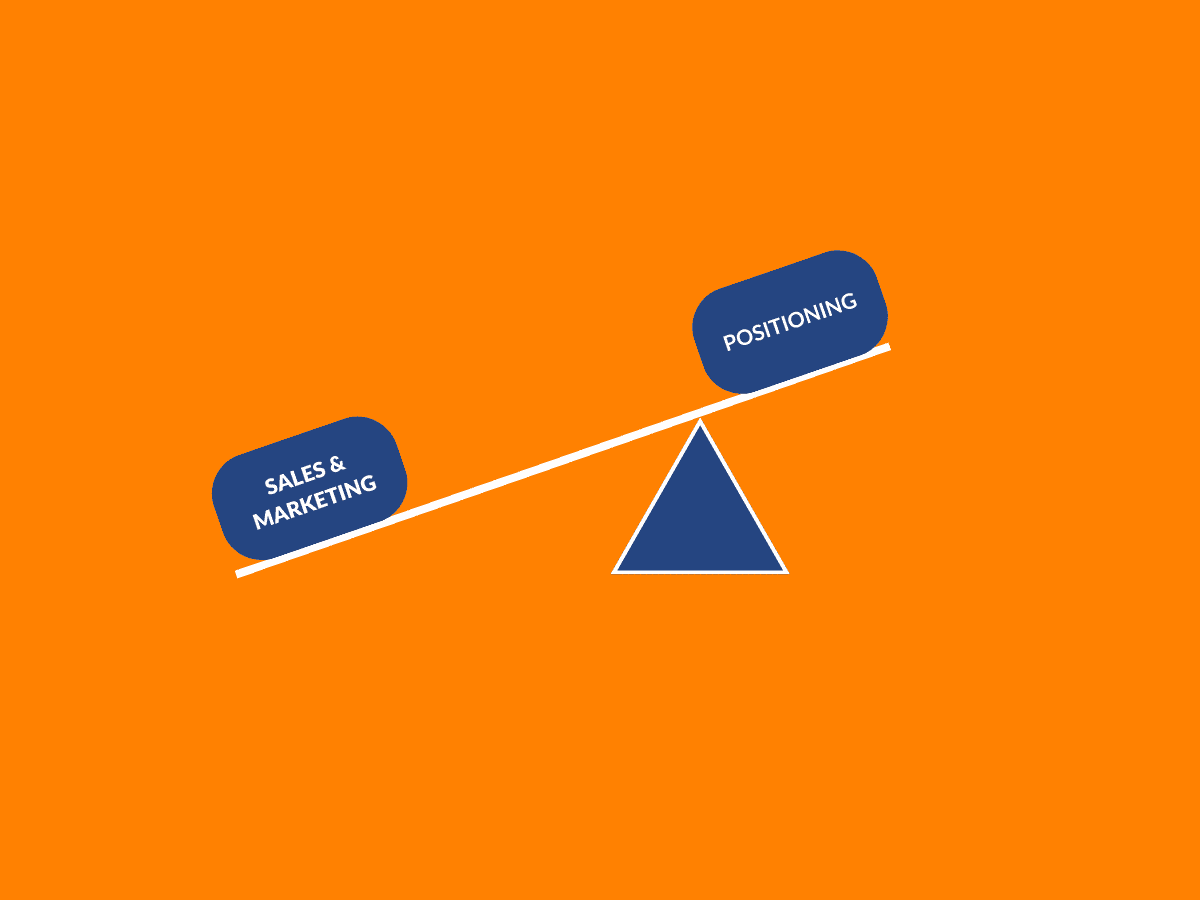
Figure out your mission and positioning first. That provides leverage to make sales and marketing easier.

(Because Mimiran is built for solo people who don’t have another department to figure this stuff out for them, it comes with a Mission & Positioning tool to help with all this. You can also take this free training on creating Cask-Strength Positioning for solo consultants.)
Sorting, Not Convincing
In some of those books or training courses, you heard that “sales is a sorting exercise, not a convincing exercise.”
Effective sales reps (and marketing teams) know this, and do everything they can to help suspects and prospects sort themselves appropriately. You’re unlikely to convince these bad fits to buy (worst case scenario, you do, and then you have a bad-fit project, which really drags you down). The more time you invest trying to convince a bad-fit prospect to buy, the less time, energy, and joy you have to take care of the good-fit prospects and clients.
If you try to fix the sales problem when you don’t have a sales problem (or least not a sales bottleneck), you will end up more frustrated than when you started. (So I’m told.)
So, make sure you clearly state who your ideal clients are, how you help them, and how that’s different from their other options. Make sure your virtual sales team, i.e. referral partners (turns out you are a VP of Sales after all), know your message. If your partners refer shoulder or heart patients instead of knee patients, that’s a sign you need to address this issue. Make sure your website, LinkedIn profile, and any other online profiles make it very clear.
Once you have a waiting room full of knee patients, you can think about why some patients who really are good candidates for surgery choose to wait or go elsewhere. Until then, concentrate on filling the waiting room with the right people.